

When it comes to mortgage rates, we have all been spoiled. We keep asking when will rates return to the 3 percent range, experienced during 2020 and 2021? Or when will they fall at least near those all-time, historic lows?
Be careful what you wish for! Mortgage rates dropped in 2020 due to the Federal Reserve’s monetary policy in response to the Covid Pandemic. The Fed feared another Great Recession that would cause jobs to plummet. In the years after Covid, mortgage rates rose again as inflation increased.
While inflation has dropped significantly in the last year, most economists fear that Trump’s plans to impose trade tariffs will cause inflation to rise again.
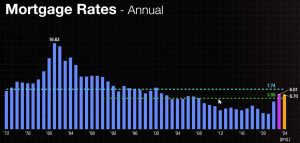
Regardless, we should recognize that mortgage rates between 6 and 7 percent – where they stand today — are well below the historical national average, as shown in the chart.
All this is to say, one cannot time the market. According to real-estate experts, whether you’re a buyer or seller, proceed based on your immediate needs and desires, not on what interest rates might do. Experts readily admit they own no crystal ball and cannot project what calamity or good economic news might arise.
While housing still remains in scant supply in most of the nation, including the Plymouth area, we have seen some softening in the housing market. Home listings have edged up in number, yet they still remain well below a balanced market. While Days on Market have risen, as have price drops (perhaps because sellers thought that home prices would continue their rapid rise), we still remain in a sellers’ market. We expect homes to continue to rise, but at a much slower rate.
Real estate will remain a great investment. So get off the sidelines, unless you see a reckless repeal of mortgage regulations – as was the case leading to the Great Recession. In the great movie (and book) “The Big Short”, actor Steve Carell is one of four characters who predicted the coming crash. Investment bankers and mortgage companies, and even rating agencies, thought these characters were crazy, blinded by all the money they were making.)
Historically, residential real estate, nevertheless, has proven to be a great investment over time, appreciating 4 percent annually, on average.
Americans are more hopeful than a year ago that mortgage rates will come down. However, according to Fannie Mae, only 1 in 5 thought that last December was a good time to buy a home. (Sponsored by the government, Fannie Mae buys mortgages from lenders to help make affordable housing more accessible. Its mission: to provide liquidity and stability to the housing market.)
Fannie Mae economists expect a modest decline in mortgage rates, decelerating home price growth, and higher wage growth to improve the relative affordability of purchasing a home in the new year.
In its forecast, Fannie Mae predicted that sales of existing homes would remain near 30-year lows this year, in large part because elevated mortgage rates will keep many would-be sellers feeling locked into their existing loans.
According to Fannie Mae, limited home inventory, along with other factors, will produce a highly competitive housing market in 2005.
Knowing all this, will you be making a move in 2025?