

55+ homeowners opting to age in place may want to consider installing a residential elevator as an alternative to climbing stairs.
Even if not yet ready for an elevator, you may want to act proactively. Research now the pros and cons of the two major types of residential elevators as well as reputable manufacturers, ongoing maintenance plans and costs, and experienced installers.
One of the most expensive retrofits to a home, a residential elevator may still be less expensive than the cost of moving. The Beth and Steve Team (as Designated Seniors Real Estate Specialists) will help you evaluate whether to stay in your existing home (and what retrofits you may need over time), or to make the move to your next home and lifestyle.
Elevator costs
How much does it cost to purchase and install a home elevator? The price can typically range between $40,000 and $65,000, plus maintenance, repairs, and, if needed, the building of a hoist-way by a local contractor. (The hoist-way serves as a chase that the elevator fits in.) Residential elevators continue to increase dramatically in popularity among the growing throng at or approaching Senior status, as well as wheelchair-bound people of any age.

Residential elevators typically carry 1-3 people with a maximum capacity of 950 pounds, according to Jack Contois, president of CMC Elevator, who says his firm has installed over 1,000 private residential elevators. Residential elevators reportedly last 20 to 30 years with regular maintenance.
Will these elevators add to the value of your home? Perhaps. If the buyer of your home sees an elevator as space-taking and superfluous, then it won’t add much value. If the buyer sees its benefits, perhaps you will regain all or most of its total costs.
Installation
Installation requires two or three laborers over, say, 5 to 7 days. And like any major renovation, homeowners must endure the dust, noise, and interruptions over the install period. An elevator installation may also be stressful due to contractors cutting holes in your ceilings and floors, which requires temporary support bracing, until workers install proper weight-bearing joists. At the same time, you may find watching the process quite interesting, ameliorating any inconvenience.
Factors to consider:
- Available space for placement of the elevator,
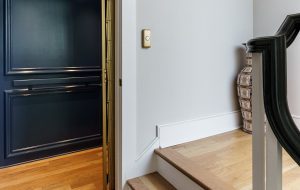
Time-tested hydraulic elevators are moving beyond commercial applications and into your home. - Best location in your home,
- Door width and other accessibility needs,
- Design and appearance preferences,
- How many people and pounds will the elevator cab hold,
- Whether the elevator is quiet or noisy during operation,
- Safety features and concerns, and
- Needed electrical hookups.
The two types of residential elevators:
- Time-tested hydraulic elevators, similar to office-building elevators. These elevators use a piston and hydraulic fluid to move the cabin.
- Pneumatic vacuum elevators. These elevators use air pressure to create a vacuum that raises and lowers the elevator.
Hydraulic Elevator:
- A hydraulic elevator requires the building of a sheet-rock-walled hoist-way (or chase) typically creating an approximate 5’ x 5’ opening. The hoist-way is built by a separate contractor apart from the elevator supplier.
- A hydraulic pump pushes fluid into a cylinder, which moves a piston, lifting the elevator car.
- Pros: Can handle heavier loads, and offers a smoother, quieter ride than pneumatic vacuum elevators.
- Cons: Can be slower and consume more energy, requires a separate machine room (typically in a basement), and takes up more space than pneumatic vacuum elevators.

Pneumatic Vacuum Elevators:
- A vacuum created above the elevator car creates atmospheric pressure that pushes the car upwards. To descend, the vacuum is released, and gravity lowers the car.
- Pros: Pneumatic elevators are more energy efficient than hydraulic elevators, don’t require a machine room, and offer a more modern, sleek and glassy design.
- Cons: Limited in height and weight capacity, noisier than hydraulics, and are not as time tested.
As mentioned, hydraulic elevators require the building of a walled chase, in which the elevator sits inside. A hydraulic elevator consumes more space than pneumatics.
In contrast, pneumatic cabins are often clear, stylish glass, which many consumers prefer, while others find them claustrophobic, particularly in smaller sizes.
When shopping for a residential elevator, space requirements and cab and door size need to be carefully considered. Hydraulic elevators are considered to be the most dependable with a proven track record. Pneumatic vacuum elevators can be noisy, so make sure to listen to one in operation before purchasing. However, due to their modern appearance, lack of the need for a machine room, generally lower cost, and energy efficiency, pneumatic vacuum elevators are preferred by many homeowners.
Both residential elevator types have backup power to operate during an electrical outage, so a rider arrives safely at his or her destination. However, you may want to consider the addition of a whole-house generator to gain uninterrupted elevator service. (Beth and I installed a seamless hole-house generator several year ago for about $12,000.)
Both elevator types adhere to safety standards by ASME and ANSI regulators. Features like emergency brakes, door sensors, and backup power are essential for safe operation.
For electrical power, residential elevators need a 240 circuit powered at 30 amps and a 120 circuit at 15 amps for elevator lighting.
Independent contractors may work with multiple elevator brands, providing a broader perspective, according to Property Manager Insider. Firms specializing in elevator consulting and inspections can provide unbiased analysis of equipment and maintenance practices.
Many YouTube videos exist on the installation and use of a home elevators including this one from This Old House.
Staying put? Will you go the elevator route in your 2-story home? Or will you opt to seek your next home or lifestyle a block or town away, or in another state, climate or country?