

JunkLuggers — a vetted firm we recommend for recycling hard to shed items like mattresses and box springs — offers “40 mind-blowing stats about Waste Management”. This post contains some stats that we should all know, and how you can contact JunkLuggers.
Society creates junk at an alarming rate — an d a lot of that junk ends up in landfills. The world has a junk problem that can only be solved by better recycling.
- The United States generates an average of 4.9 pounds of trash per person every day — the highest amount of waste per person of any country on Earth.
- While we are constantly bombarded with ads that we need more stuff, upgrading to the latest tech, fashions, gear, etc. often means getting rid of things we aready own. The problem? Most people don’t think to donate, recycle, or repurpose their old, unwanted items so they end up in a landfill.
- Worldwide, unregulated or illegal dump sites serve about 4 billion people and hold more than 40% of our waste.
- Roughly 80% of items buried in landfills could be recycled.
- Recycling 1 million laptop computers can save enough energy to run 3,500 US homes for a year.
- While electronic waste represents only 2% of the debris dumped in American landfills, it equals around 70% of toxic waste.
- Approximately 350,000 mobile phones are disposed of each day.
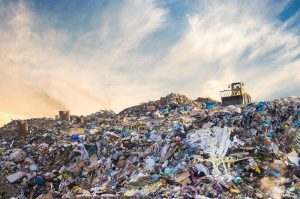
- Almost every home in the US has a television, computer, and smartphone — if not several of each. As technology advances and newer models replace older ones, where do we dispose of these devices? Unfortunately, when electronics end up in landfills, it puts the environment at risk. In addition to taking hundreds of years to break down, electronics leak toxic chemicals like lead and mercury into the soil.
- The US generates more plastic trash than any other nation. Plastic takes more than 400 years to degrade.
- A staggering 8 million metric tons of plastic trash winds up in our oceans each year.
- The paper and plastic cups, forks, and spoons disposed of annually could stretch 300 laps around the equator.
- The US throws away as many as 35 billion plastic water bottles each year. Only some 25% are recycled.
- The Great Pacific Garbage Patch, a floating island of garbage located halfway between Hawaii and California, is estimated to be about 620,000 square miles in size —twice the size of Texas and three times the size of France.
- Around 66% of our energy could be saved by producing plastic products from recycled plastics instead of brand new materials.
- 75% of America’s waste is recyclable, yet we only recycle 30% of it. The US throws away $11.4 billion worth of recyclable containers and packaging every year.
- For three decades, China imported 45% of the world’s plastic waste. In 2017, the country decided to impose a ban on imported plastics. The new restrictions have caused much trouble for the US and other countries that previously relied on exporting plastic waste overseas.
How do we fix the junk problem?
Sustainable junk removal is a good starting point. What exactly does that mean? As a society, we need to be more conscious about donating first, then recycling and reusing second.
By consciously exercising more care in how we get rid of junk, we can minimize the waste we generate and reduce our dependence on landfills, says JunkLuggers’ Charles “Skip” Dennis. Call him at (774) 281-2800 or email: Charles.Dennis@JunkLuggers.com.